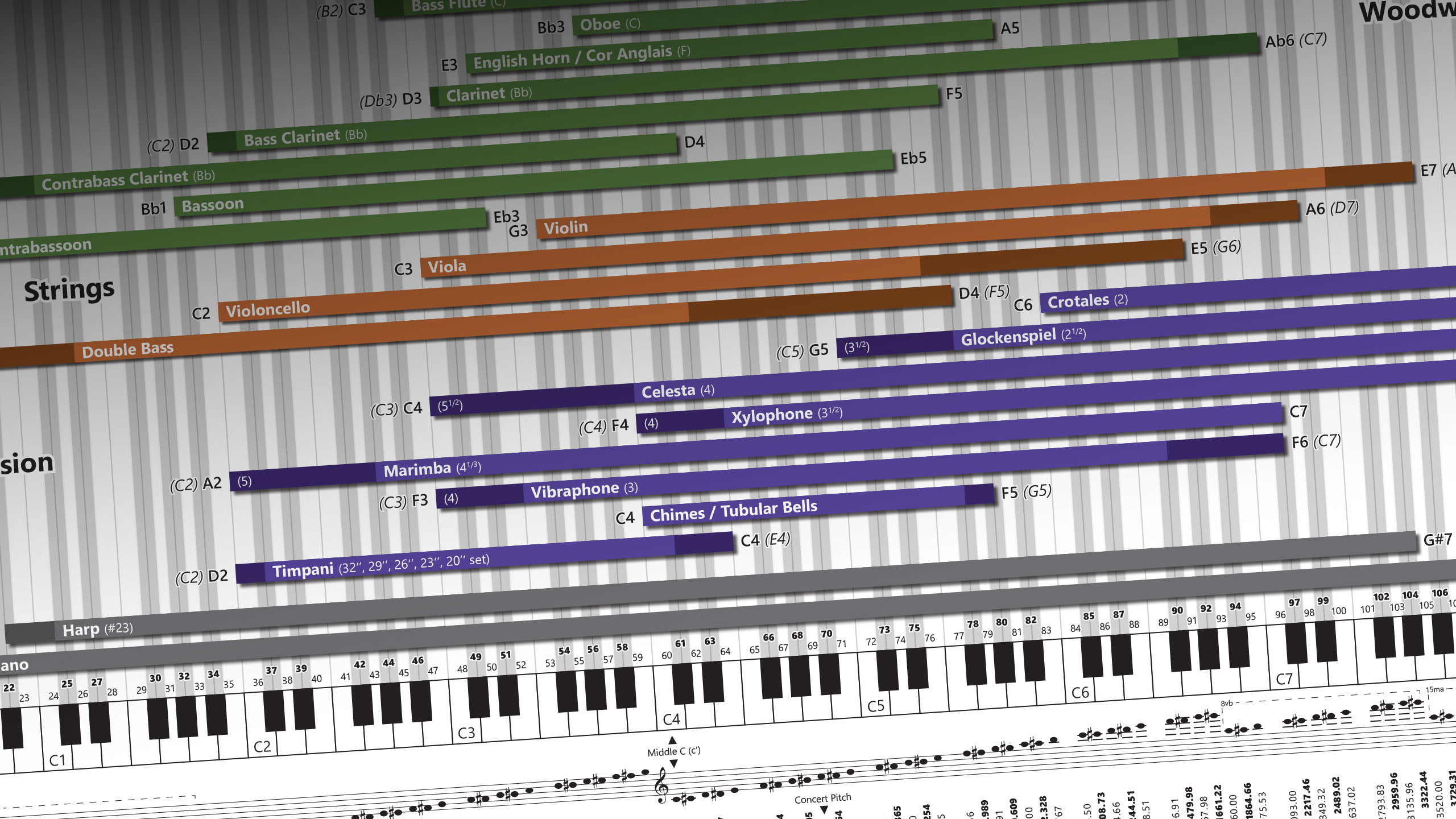
Over the past few years, I’ve spent a lot of time researching, both for my work as a musician and for the development of Keyswitch & Expression Map. Along the way, I noticed how many half-truths circulate online and how difficult it can be to find reliable information. Above all, though, there is a lack of good design that visually connects sometimes complex information and translates them into easy-to-understand graphics.
To share what I’ve learned, I’m currently putting together a small library of freely available musical resources on the Interfacette website, starting with these charts.
Reference Chart – Orchestral Pitch Ranges
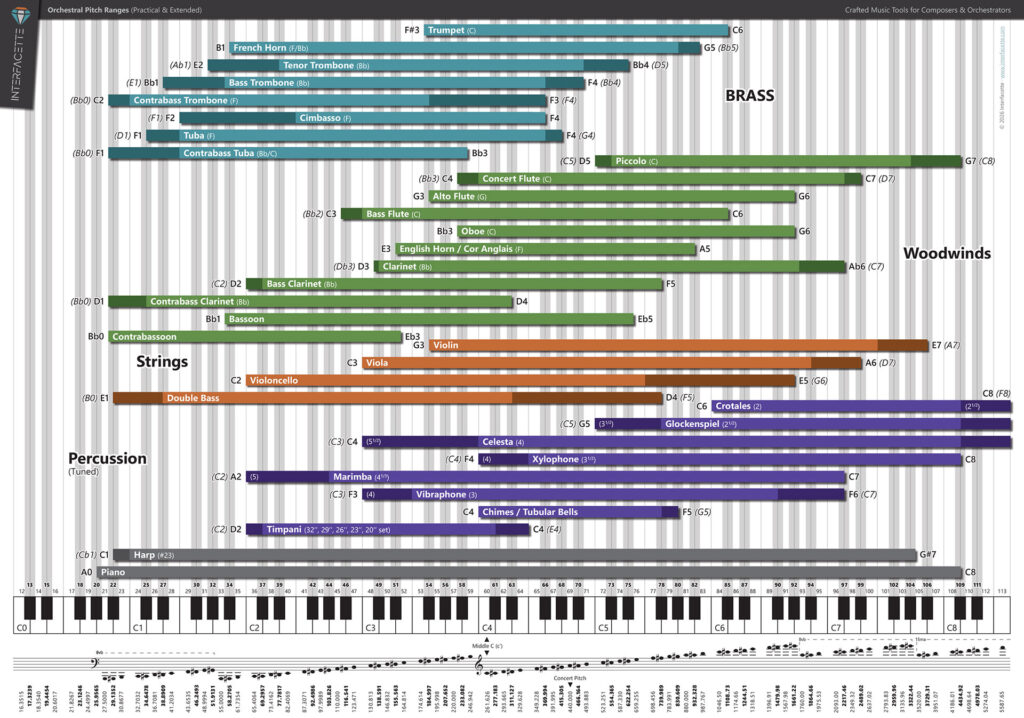
A handy reference chart for composers, orchestrators, and music students. Whether you are writing for violin, violoncello, flute, clarinet, French horn, or a full orchestra, the chart provides a quick overview of the practical and extended ranges of the most commonly used orchestral instruments. In addition, it includes concise notes on topics such as instrument extensions, pedal tones, intonation challenges in high positions, and special cases like harp retuning or low-B footjoints for the flute.
MIDI Note Numbers
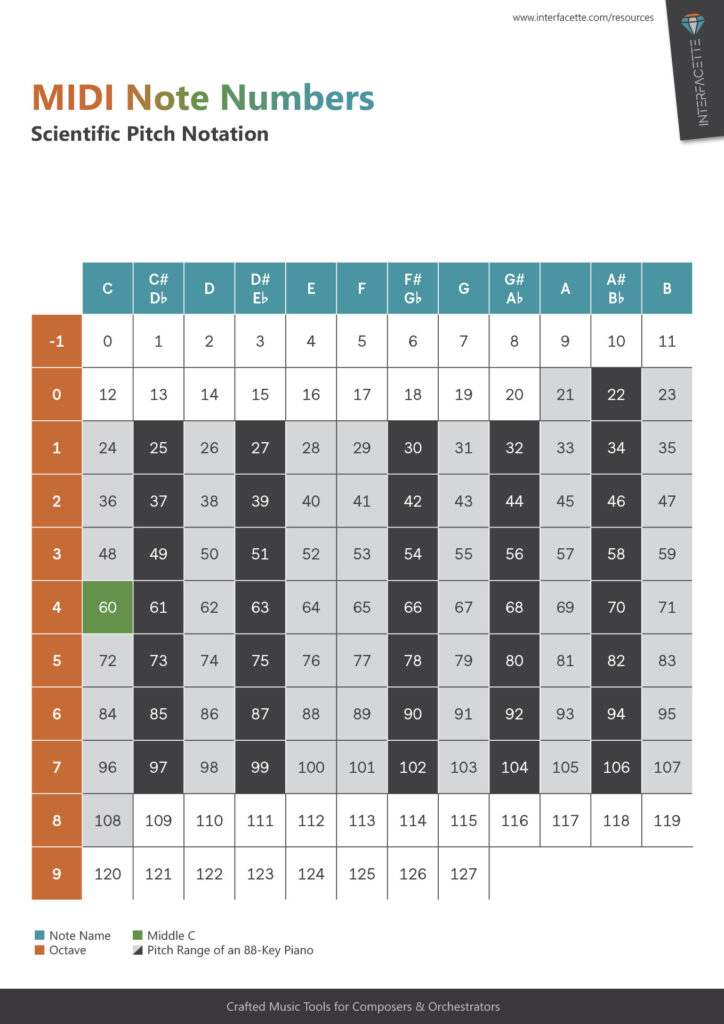
A two-page PDF showing MIDI note numbers in Scientific Pitch Notation (Middle C = C4) and Ableton Live’s naming convention (Middle C = C3). The layout highlights the range of an 88-key piano and distinguishes black and white keys, making it quick and easy to find the note you’re looking for.
Violoncello – Positions & Fingering
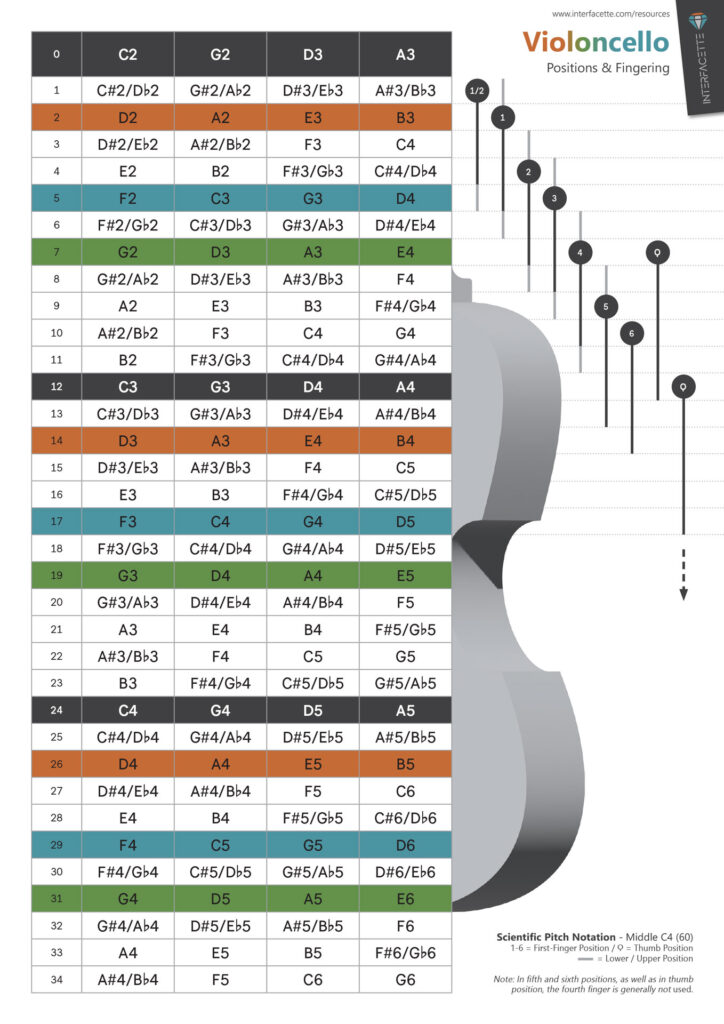
A chart showing the positions on the cello fingerboard. I originally made it for myself to make planning fingerings easier and have now updated it for Interfacette. The PDF includes three versions with different pitch-naming conventions: middle C as C4, C3, or c′ in Helmholtz notation.